
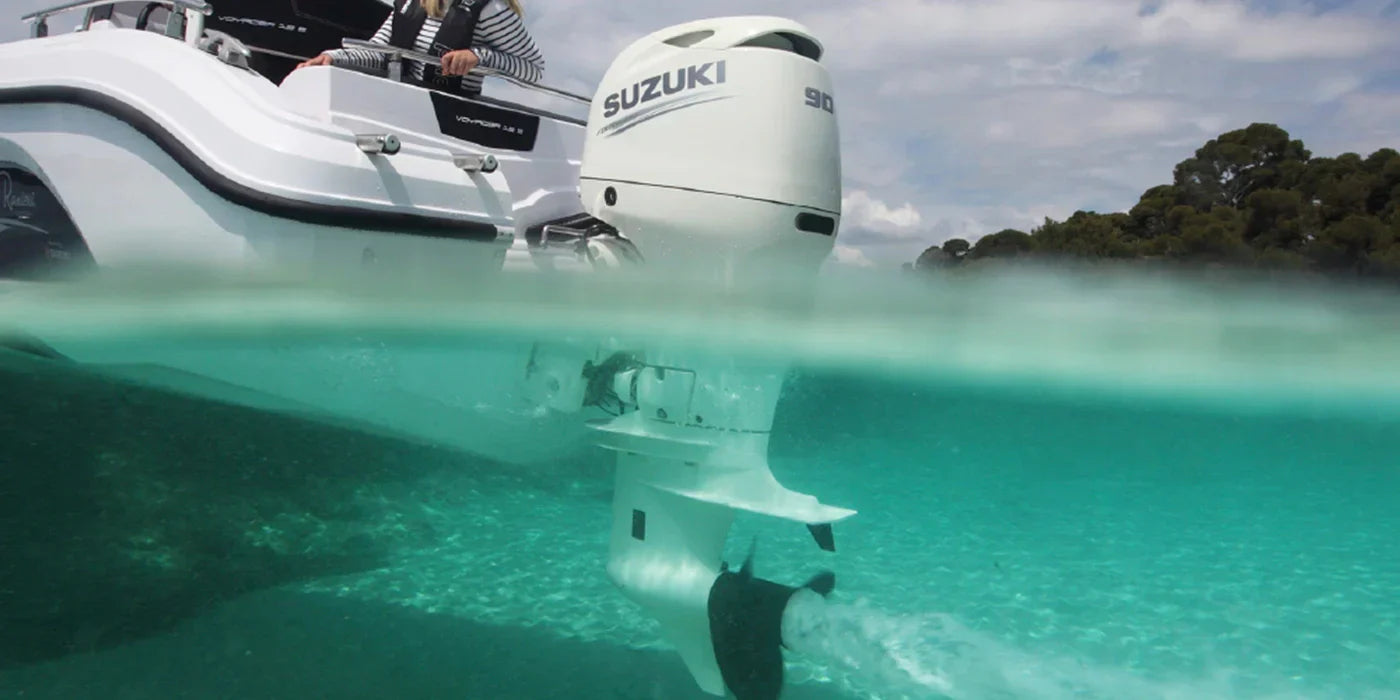
Suzuki Propellers—Selecting the One That’s Right for You
Selecting the right Suzuki propeller is crucial for optimizing the performance of your Suzuki outboard motor. The right choice can significantly enhance your boat’s performance, fuel efficiency, and overall boating experience. This guide will walk you through the essential aspects to consider when choosing Suzuki propellers.
Enhancing Performance: Boost Horsepower, Reduce RPM
Maximizing horsepower while minimizing RPM is a delicate balance that can improve fuel efficiency and prolong engine life. Choosing the right propeller can help achieve this balance by ensuring your Suzuki outboard motor operates within its optimal RPM range.
How Suzuki Propellers Impact Performance
- Horsepower Optimization: A well-selected Suzuki propeller can help your engine reach its full horsepower potential. Matching the propeller’s pitch and diameter to the engine’s power output ensures efficient power transfer from the engine to the water.
- RPM Reduction: Proper propeller selection ensures the engine runs at lower RPMs without sacrificing speed. Lower RPMs reduce engine wear and tear, extend engine life, and improve fuel efficiency, translating into cost savings over time.
Key Considerations for Outboard Propellers
When selecting a propeller for your Suzuki outboard motor, consider the following factors:
Number of Blades
The number of blades on a propeller affects its performance and suitability for different boating activities.
- Three-Blade Suzuki Propellers: Offer a good balance of speed and efficiency, making them ideal for general-purpose use. They provide a high top speed and better fuel efficiency for cruising.
- Four-Blade Suzuki Propellers: Provide better acceleration and handling, making them suitable for watersports and heavier boats. They offer improved thrust and maneuverability, especially in rough waters, at the cost of slightly reduced top speed.

Propeller Rotation
Propellers can rotate in two directions, and the choice depends on your specific boat setup.
- Right-Hand Rotation: The standard rotation direction for most outboards is designed to provide balanced performance and easy handling.
- Left-Hand Rotation: Used in dual-engine setups to balance the boat’s performance by countering the torque effects of right-hand rotation propellers, enhancing stability and steering control.
Propeller Pitch
Pitch refers to the distance a propeller would move in one complete revolution if it were moving through a solid.
- High Pitch: More speed, less acceleration. Suitable for lighter boats and high-speed applications. High-pitch propellers are ideal for boats that need to cover long distances quickly or for performance-oriented boating.
- Low Pitch:Better acceleration and less speed. They are ideal for heavier boats and watersports where quick starts and strong pulling power are needed. Low-pitch propellers also benefit boats carrying heavy loads or towing water skiers and wakeboarders.
Propeller Diameter
The diameter of a propeller is the distance across the circle that the blades make when they rotate.
- Large Diameter: Provides better thrust and is suitable for heavier boats. Larger diameter propellers can push more water, offering better control and power in rough conditions or when carrying heavy loads.
- Small Diameter: Offers higher speeds but less thrust, ideal for lighter boats. Smaller diameter propellers reduce drag, allowing for higher top speeds and more efficient cruising in light load conditions.
Aluminum vs. Stainless Steel Suzuki Props
The material choice affects durability and performance.
- Aluminum Propellers: Affordable, lightweight, and suitable for general use. They are more susceptible to debris and grounding damage, but are easier and less costly to repair.
- Stainless Steel Propellers: These are more expensive but extremely durable and perform better. Stainless steel propellers are corrosion-resistant and can withstand more stress, making them ideal for high-performance applications and harsh marine environments.
Cupping
Cupping refers to a slight curve or cup at the trailing edge of the propeller blade.
- Benefits of Cupping: Improved grip in the water, reduced ventilation, and enhanced performance at higher speeds. Cupped propellers are particularly beneficial in maintaining speed and efficiency in choppy water or when executing sharp turns.
Propeller Rake
Rake is the angle of the propeller blades relative to the hub.
- Positive Rake: Helps lift the boat’s bow, improving performance in rough waters and increasing top-end speed. Positive rake propellers are suitable for boats that ride higher in the water.
- Negative Rake: Helps keep the bow down, providing better control and efficiency in calm waters. Negative rake propellers enhance stability and benefit boats operating in calmer conditions or requiring a more level running attitude.

Additional Considerations for Selecting Suzuki Propellers
To ensure you get the most out of your Suzuki outboard motor, consider these additional factors:
Boat Load and Usage
Understand your boat’s typical load and usage to choose the right propeller.
- Light Loads: Higher pitch and diameter propellers for better speed. These propellers are suited for boats that often run with minimal load or for activities where speed is a priority.
- Heavy Loads: Lower pitch and diameter propellers for better thrust. These propellers are ideal for boats that frequently carry heavy loads, such as fishing boats or workboats, where pulling power and control are more important than top speed.
Trial and Error
Sometimes, finding the perfect propeller involves trying different options to see which offers the best performance for your specific needs. Conducting sea trials with different propellers can help identify the best match for your boat and engine setup.
Regular Maintenance
Proper maintenance of your propeller ensures longevity and optimal performance. Inspect for damage, such as nicks and bends, and clean regularly to avoid performance issues. Balanced and well-maintained propellers reduce vibrations and extend the life of your outboard motor.
Evaluating Your Boating Needs
As you begin your outboard propeller selection process, consider the type of boating you do and the aspects of your boat’s performance you would like to correct or improve. Generally, boaters aim to enhance one or a combination of the following factors:
- Fuel economy: Optimizing propeller pitch and diameter can improve fuel efficiency. A propeller that allows the engine to operate in its optimal RPM range will often provide the best fuel economy.
- Failure to reach optimum RPM at WOT: If your engine struggles to reach its ideal RPM at WOT, a lower-pitch propeller may be necessary to allow the engine to perform at its best.
- Inability to reach top speed: To achieve higher top speeds, consider a propeller with a higher pitch and possibly a smaller diameter, provided it doesn’t overstrain the engine.
- Ventilating or cavitating: Cupped propellers and those with a suitable rake can reduce ventilation and cavitation, ensuring a smoother and more efficient ride.
- Hole-shot and acceleration: A lower-pitch propeller can improve acceleration, particularly from a standstill. This is crucial for activities like waterskiing and wakeboarding.
- Over-revving at Wide-Open Throttle (WOT): If your engine revs too high at WOT, the propeller pitch may be too low. A higher-pitch propeller can help bring the RPMs down to the recommended range.